
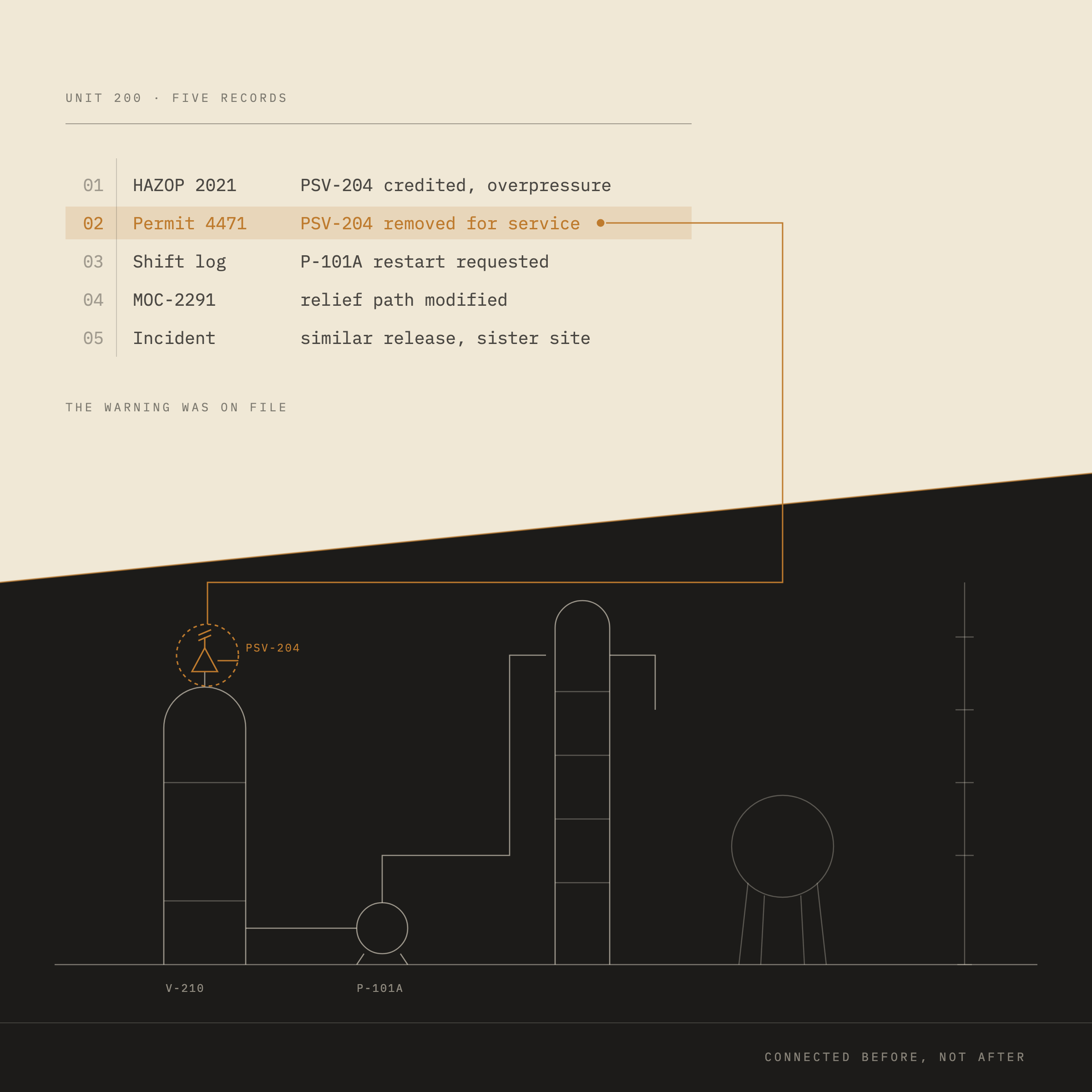
The warning was on file: why we built uc2c.ai
Major industrial accidents are investigated in depth, and the investigations keep finding the same thing: the warning signs were already on file. This is why that happens, and what we built to change it.
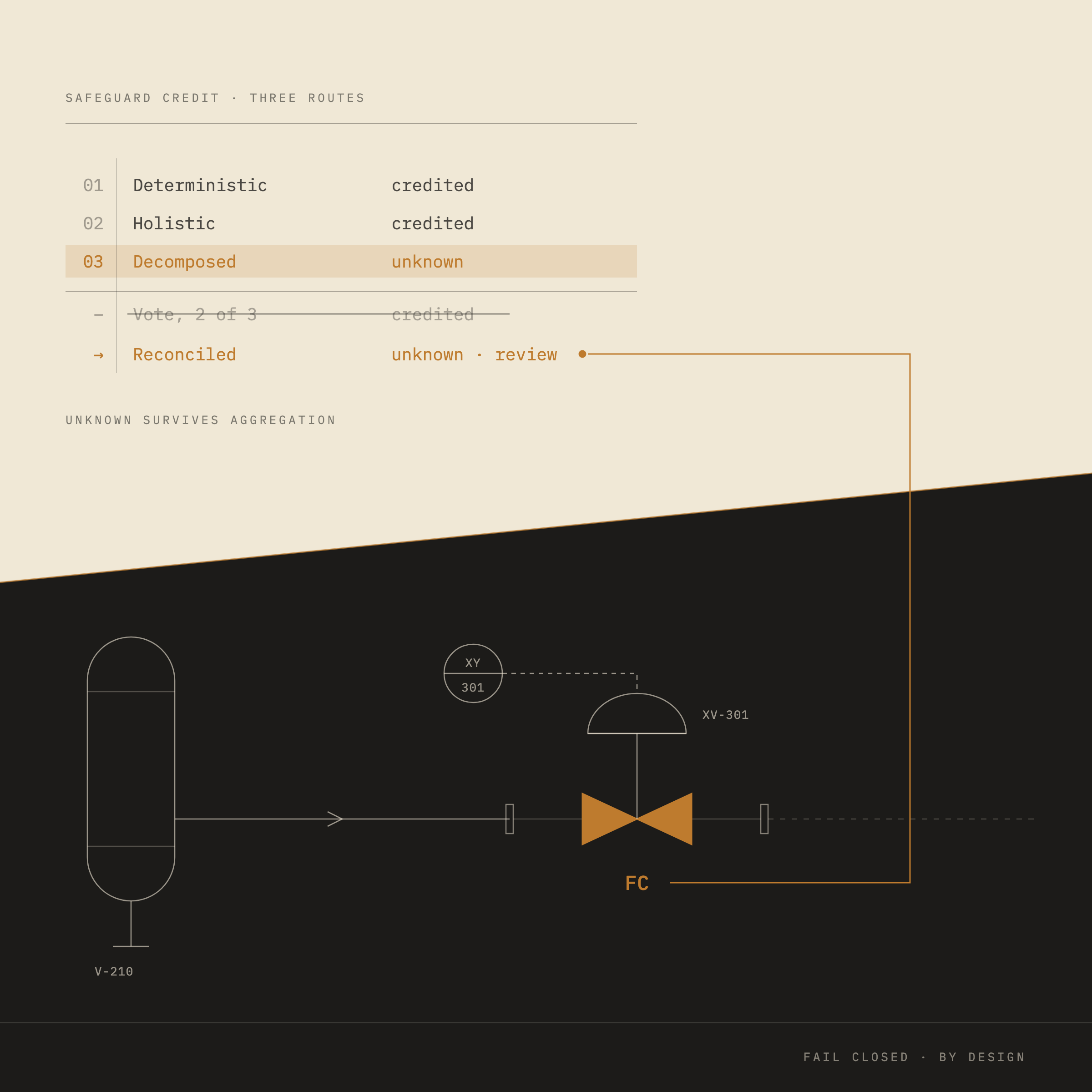
Fail-Closed by Design: Why Auditable AI Can’t Depend on Unconstrained Agency
Agents are useful. But when an AI result may have to be defended years later, agency and authority shouldn’t be the same thing.
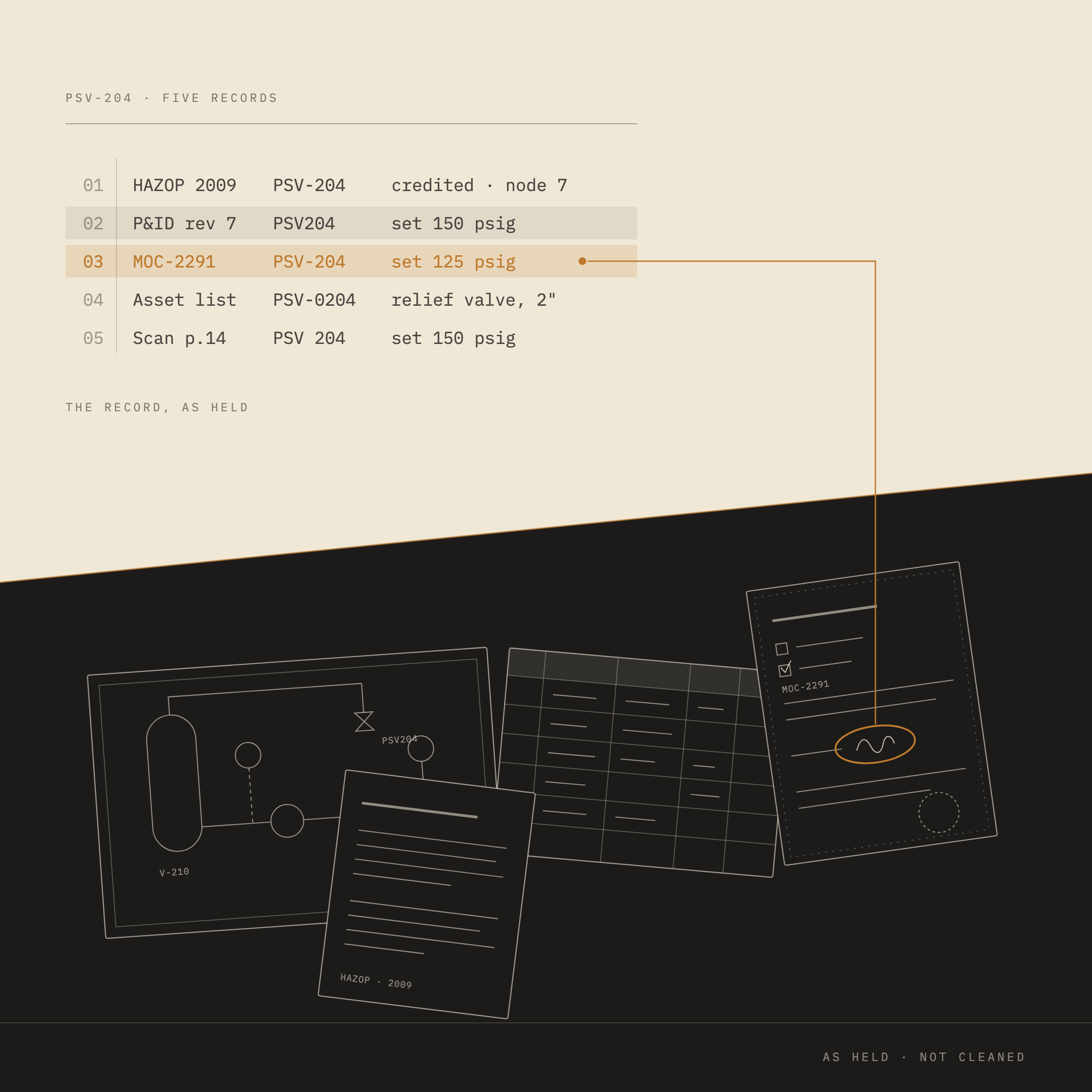
Your plant’s data doesn’t need to be clean
AI search will tell you that hazard-analysis AI needs clean, digitized records first. No operating plant has them. Here is how Hazard Navigator works from your documents as they are, and why the places they disagree are the findings worth having.
Risk is risk
In software, a P1 takes the system down. In a refinery, a P1 is a multiple-fatality event. Same scale, different stakes — and only one of these industries ever got the tools built to drive error rates down.
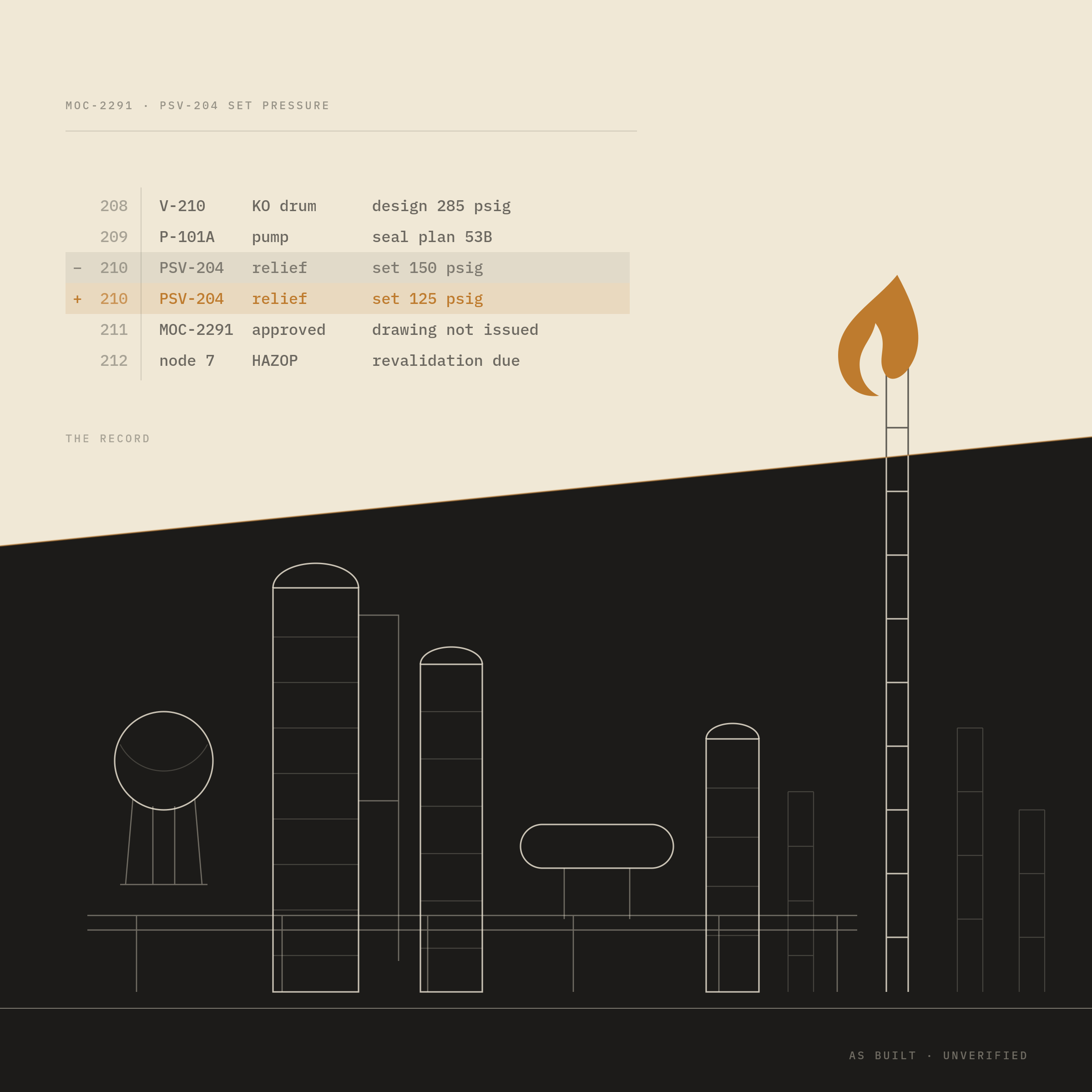
The Market Already Knows What Your Documents Know
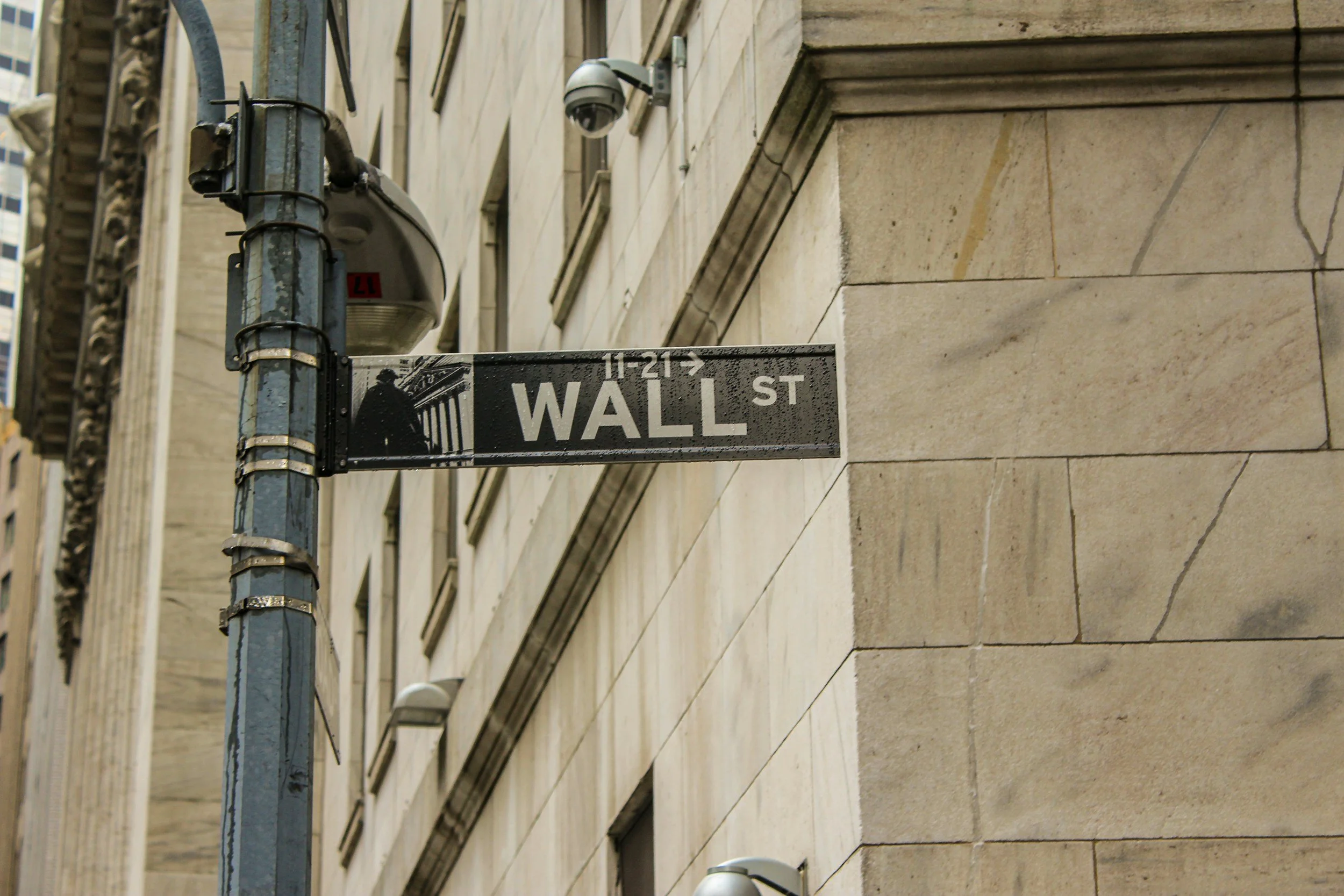
When a major operational failure becomes public, the reported loss is rarely the whole cost. McKinsey found affected companies lose an average of 3.7x their direct losses in shareholder value — because markets price what the failure reveals: knowledge the organization had, but that never reached the decision that needed it.